
When Attachment and Differentiation Collide
Why families mistake developmental anxiety for dysfunction


One of the great tensions of human life is this:
We are born needing attachment, and we spend the rest of our lives trying to become a self.
Those two realities are deeply connected, but they create tremendous anxiety inside families and relationships because every meaningful bond eventually runs into the same problem:
How do I remain connected to you while also becoming fully myself?
I think we are increasingly struggling to understand this process in modern culture. More and more, the anxiety that naturally emerges during differentiation gets interpreted as evidence of pathology. Dysfunction. Toxicity. Narcissism. Emotional immaturity.
Sometimes those things are truly present. Of course they are. Some relationships are genuinely destructive. But many times (I would even argue most) what people are actually experiencing is the strain of renegotiating attachment while people grow, change, separate, marry, move away, shift identities, develop convictions, disappoint one another, and reorganize their lives over time.
At the core of healthy relationships, I tend to think of three domains working together:
Attachment.
Differentiation.
Communication.
Attachment is our need for enduring emotional bonds. It is our need to know we matter to someone. That we are loved, valued, remembered, held in mind. Human beings regulate through connection. Much of our internal sense of safety is shaped through relationships.
This is why attachment ruptures can feel so psychologically destabilizing, especially when the bond is primary and identity shaping. Parent child relationships and long term romantic partnerships carry extraordinary emotional weight because they become intertwined with belonging, continuity, safety, and meaning.
When those bonds rupture, people often experience much more than sadness. A parent losing contact with an adult child may suddenly question their worth, their purpose, even their place in the world. A spouse betrayed by a long term partner may begin experiencing the world itself as emotionally unsafe. An abandoned child may carry that rupture into future relationships for decades.
Attachment theory has helped us understand these realities in important ways. Unfortunately, attachment language online has become increasingly flattened and oversimplified. Every desire for closeness becomes “anxious attachment.” Distance gets reframed as emotional health. Avoidance gets romanticized as independence. People now use attachment language almost like a sorting mechanism for who is healthy and who is unhealthy.
Attachment it is a central part of being human.
The goal of secure attachment is not emotional self sufficiency. Human beings are not designed to become psychologically or emotionally untethered from one another. We are profoundly shaped by love, rejection, belonging, abandonment, intimacy, and loss throughout the entirety of our lives.
At the same time, healthy relationships also require differentiation.
Differentiation is our ability to develop a self while remaining connected to others. It is the process of learning who we are, expressing what we think and feel, managing our own anxiety enough to tolerate disagreement, and allowing other people to do the same without collapsing the relationship.
How do I be me and let you be you and still maintain connection?
That is differentiation.
People with lower levels of differentiation often struggle to manage separateness and connectedness at the same time. Some become highly fused with others. Their emotional stability depends heavily on approval, reassurance, closeness, sameness, or emotional merging. Others move toward emotional cutoff because distance feels easier than negotiating tension, disagreement, vulnerability, and uncertainty.
This becomes especially visible during major developmental transitions.
An adult child begins differentiating. They start expressing different beliefs. They prioritize a romantic partner. They spend holidays differently. They become less emotionally available to the family system. Sometimes they communicate this thoughtfully. Sometimes they communicate it poorly, defensively, immaturely, or with anger.
The parent feels the attachment bond destabilize.
Anxiety rises.
And then protest behaviors emerge.
This is one of the most misunderstood dynamics in modern relationships.
Protest behaviors are the things human beings do when they fear disconnection inside an attachment bond. Criticism. Pursuing. Pleading. Sulking. Becoming reactive. Shutting down. Going silent. Talking to other family members. Becoming controlling. Becoming emotionally intrusive. Becoming performatively detached.
These behaviors are often ineffective. Sometimes they are immature. Sometimes they are deeply hurtful. But many of them are fundamentally attempts to preserve attachment in the face of perceived relational threat.
A parent with a secure attachment history may tolerate differentiation with greater steadiness. They may still feel sadness or fear as a child pulls away, but they remain more emotionally regulated through the transition. A parent with significant attachment trauma may become highly reactive, anxious, erratic, or controlling because the differentiation process activates older fears of abandonment or emotional instability. An avoidantly attached parent may withdraw altogether and act as though they do not care.
These dynamics intersect in complicated ways.
What concerns me right now culturally is how quickly we are pathologizing these moments instead of understanding them developmentally and systemically. The anxiety of differentiation increasingly gets interpreted as evidence that the relationship itself is fundamentally unsafe or irredeemable.
At the same time, many families are trying to navigate these transitions with very little education around communication, emotional regulation, repair, or conflict management.
I have experienced this tension in my own family life many times.
There have been moments when I needed to make a decision or move toward a change that I believed was right for me, even while knowing the people I loved most were probably not going to applaud it. In some cases, they protested it outright. They worried. They pushed back. They reacted emotionally. Sometimes they wanted me to reconsider. Sometimes they wanted me to return to a previous version of myself that felt safer or more familiar to them.
What I have learned over time is that this does not automatically mean people are selfish, controlling, toxic, or incapable of love.
Often, it means something feels frightening.
The shift destabilizes the emotional equilibrium of the relationship or family system. It raises questions nobody fully knows how to answer yet. Will we still be close? Will this relationship survive? Will things ever feel the same again? Will I still matter in the same way?

These moments create a profound tension because we are often faced with two competing impulses.
One impulse says: regulate the other person’s anxiety. Go back. Minimize yourself. Delay the change. Stay emotionally organized around what keeps everyone else comfortable.
The other impulse says: move forward according to your best judgment. Become more fully yourself. Say the thing. Make the decision. Build the life you believe you are meant to build.
Differentiation requires us to tolerate the anxiety of disappointing people we love without collapsing our sense of self in the process.
That is incredibly difficult work.
Because when people become distressed by our growth or change, there is often enormous pressure to restore the old equilibrium. We may be pleaded with directly or indirectly to return to the role, identity, closeness, agreement, or predictability that once stabilized the relationship.
And yet many relationships actually grow through these moments.
One of the most important things we can do during these transitions is continue signaling a desire for connection while still holding onto ourselves.
I can love you and still make this choice.
I can understand your fear without organizing my entire life around managing it.
I can stay connected without surrendering my judgment.
I can tolerate your discomfort without immediately interpreting it as proof that I am harming you. Or punishing you for feeling that way. Or cut you off for refusing to validate me.
Over time, systems reorganize.
People adjust. Relationships recalibrate. Parents and adult children slowly learn how to relate to one another differently. The relationship survives the anxiety of change and becomes more flexible and reality based. Commonly, it gets worse before it gets better.
But this process is easily disrupted when every protest, rupture, or emotional reaction immediately gets interpreted as evidence of deep dysfunction.
Once that happens, people often begin escalating defensively. Harder boundaries. Less warmth. Less signaling of care. More withdrawal. More certainty that the relationship itself is fundamentally unsafe.
Ironically, this can become its own form of fusion.
We become so emotionally entangled with the reactions of others that their distress completely determines our responses. Their anxiety triggers our anxiety. Their protest triggers our cutoff. The entire emotional system hardens around fear instead of growth. A feedback loop has been initiated and too quickly labeled “toxic”.
Families have always struggled to adapt as individuals change across the lifespan.
Parents struggle when children grow away from them. Adult children struggle when becoming fully themselves risks disappointing the people they love. Couples struggle when identities shift, loyalties reorganize, needs change, or life moves them into unfamiliar territory.
This has always been part of human relationships.
I worry that right now we are losing the ability to tolerate the anxiety that naturally comes with these transitions. We increasingly interpret discomfort itself as evidence that something has gone terribly wrong. Sometimes something has gone terribly wrong. But many times what people are actually experiencing is the strain of renegotiating attachment while trying to preserve connection.
That process is messy.
People overreact. They misunderstand one another. They become defensive. They communicate poorly. They pull too hard for reassurance. They withdraw too quickly. They say things they later regret.
And yet many relationships survive this. Many relationships even deepen through it.
Not because conflict disappears, but because over time people begin learning how to stay more steady inside the tension of separateness and connection. A parent learns not to panic every time a child changes. An adult child learns that disappointing a parent does not automatically mean abandoning the relationship. A couple learns they can survive disagreement without threatening the entire bond.
Families reorganize slowly.
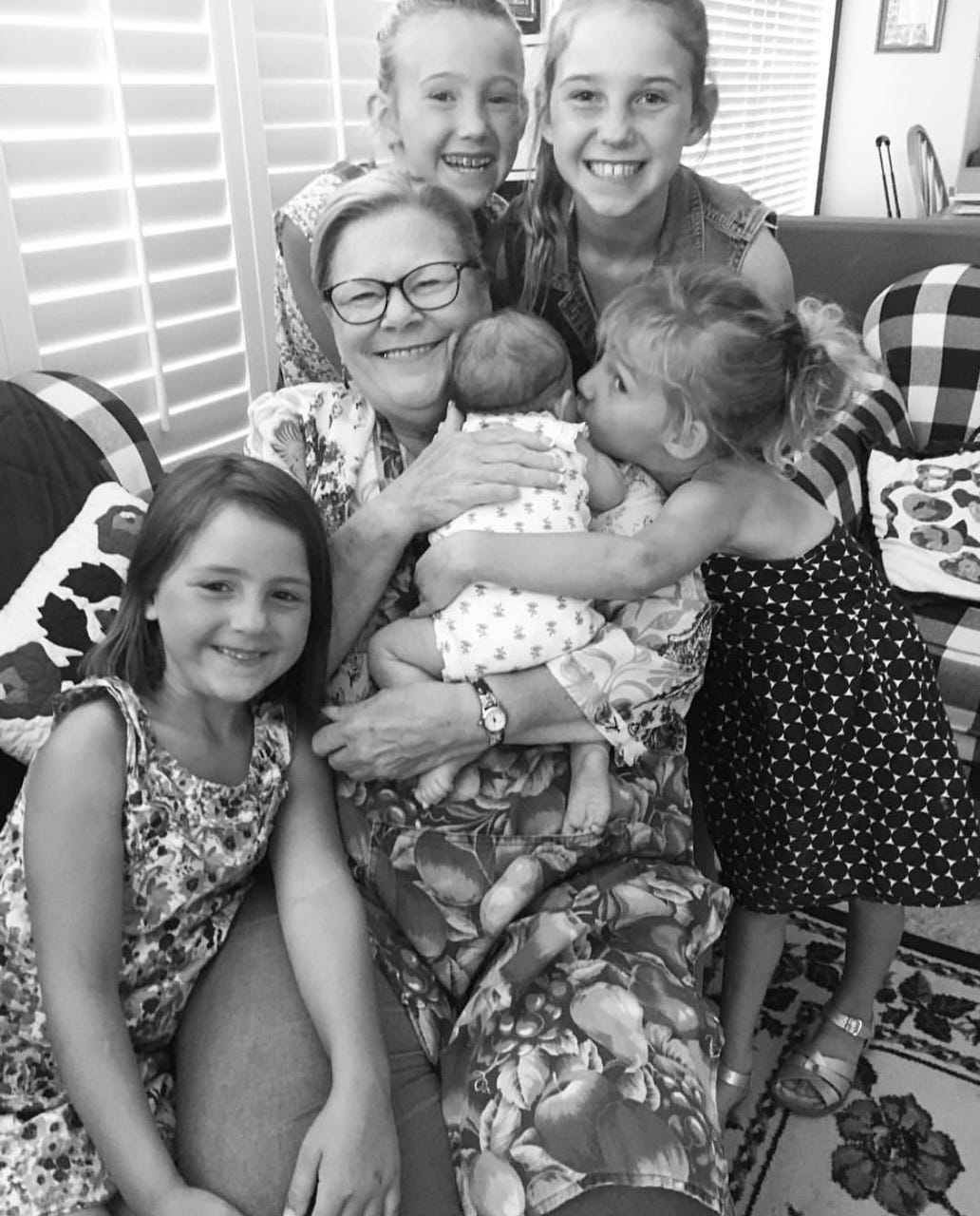
||Pictured: my daughters with their Great Grandma. Rest in peace, beloved Gigi.||
This is why I become concerned when every protest behavior immediately gets interpreted through frameworks of pathology and permanent harm. Some relationships truly are destructive and unsafe. Some people are chronically manipulative, coercive, abusive, or deeply unwilling to self reflect. But there are also many, many more families caught in ordinary developmental anxiety who are now interpreting that anxiety through increasingly catastrophic frameworks.
And this brings me to the third domain: communication.
I genuinely believe we are profoundly undereducated in how to communicate vulnerably and skillfully with one another. We possess enormous cultural fluency in identifying harm, but far less fluency in negotiation, repair, emotional regulation, curiosity, tolerance, and collaborative problem solving.
Many people have never learned how to say or respond to:
“I love you and I need something different.”
“I feel afraid of losing you.”
“I disagree with you but I do not want to destroy this relationship.”
“I need more space and I still want connection.”
“That hurt me.”
“I overreacted.”
“I misunderstood you.”
“I do not know how to navigate this transition.”
So instead, anxiety spills out sideways through criticism, defensiveness, silence, withdrawal, contempt, escalation, triangulation, and cutoff.
Differentiation was never meant to destroy attachment.
The goal is not to become emotionally untethered from one another. The goal is learning how to remain fully human, fully connected, and fully ourselves at the same time.
That takes an enormous amount of maturity.
And almost nobody learns how to do it without some degree of conflict, grief, awkwardness, and repair along the way.
Rachel, your wisdom to this is unmatched. It's as if you have lived this experience along with us. Your teaching has helped me to realize that what my daughter and I are going through can be considered a bump and not a wall, and is not insurmountable. Fortunately, we have not cut each other off, but to be honest, it was more me, the parent, who shut down during our struggles. Finding you online has changed me. I've been following you and learning from you for a while now. I no longer feel like I'm complete failure as a person or a mother. For a while, I did feel the desire to let her go completely because it felt easier to do so. Because of you, I've realized it doesn't have to come to that and that I'm not the only mother who mistakenly felt that. Our biggest divide now is that she wants to be herself, but she wants me to embrace everything she does. I'm trying to explain to het that she can be herself, but she has to let me be me too...which means Im not always going to applaud her choices. We will get through this, thanks to.you.
Thank you so much for sharing your wisdom. I pray that your teachings prevail over all of the false teachings that seem to be so popular. God blessed you, thank you for blessing us.
Wow. The most perfect explanation and words!! Thank you !!!! 💫💖